


In the logistics industry, transporting OOG (Out Of Gauge) cargo is always a major challenge for import-export businesses. Large machinery, construction equipment, or steel coils weighing dozens of tons often cannot fit into standard containers.
To solve this issue, the two most commonly used specialized containers are Flat Rack (FR) and Open Top (OT) containers. However, choosing the wrong container type can not only increase costs but also create significant transportation risks.
So, when should you use a Flat Rack container? When is an Open Top container the better choice? Let Songwin explore the details below.
1. Overview of Open Top and Flat Rack Containers
Open Top Container (OT)
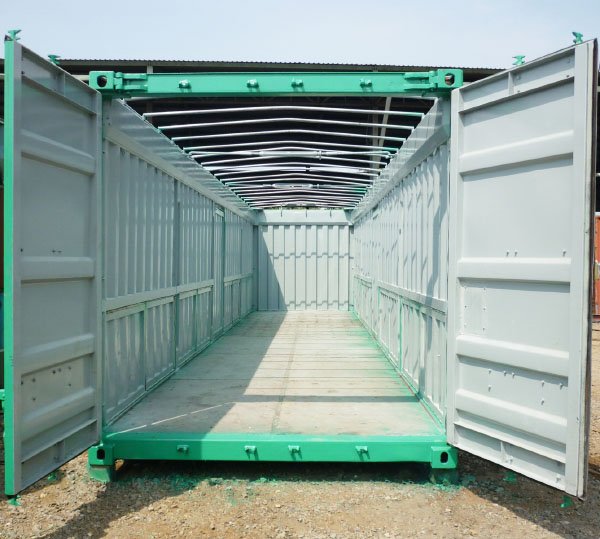
An Open Top container is a type of container without a rigid steel roof like a standard container. Instead, the top is covered with a removable tarpaulin, allowing flexible loading and unloading. The side walls and rear doors remain intact.
This type of container is suitable for cargo that needs to be lifted from above or cargo exceeding the standard height limit.
Flat Rack Container (FR)
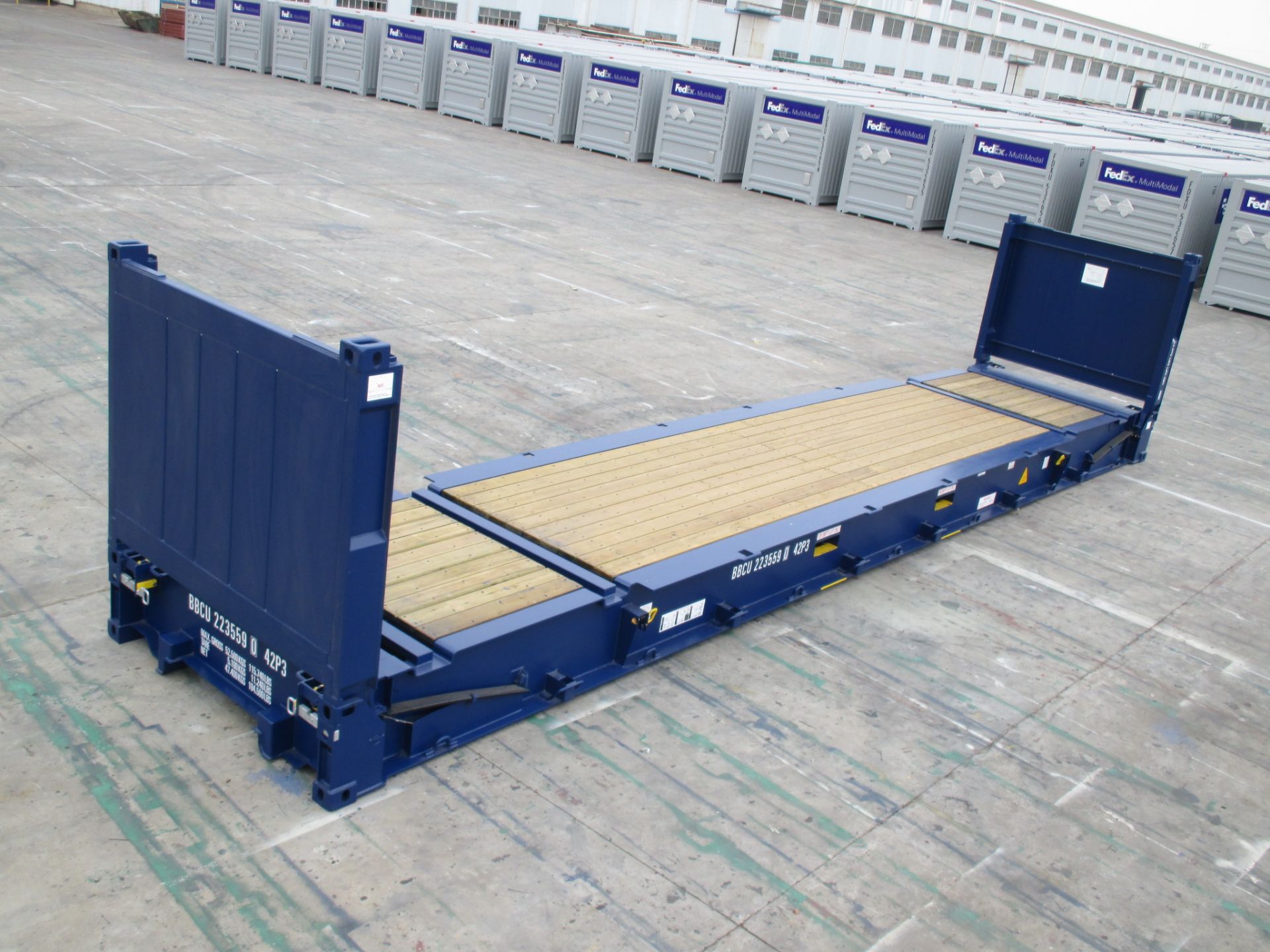
A Flat Rack container is a specialized container without a roof and without side walls. Its structure consists of:
- A heavy-duty reinforced floor
- Two end walls (fixed or collapsible)
Thanks to its completely open-sided design, Flat Rack containers are ideal for oversized and overweight cargo that exceeds both width and height limitations.
2. When Should You Choose an Open Top Container (OT)?
Cargo Exceeding Height Only
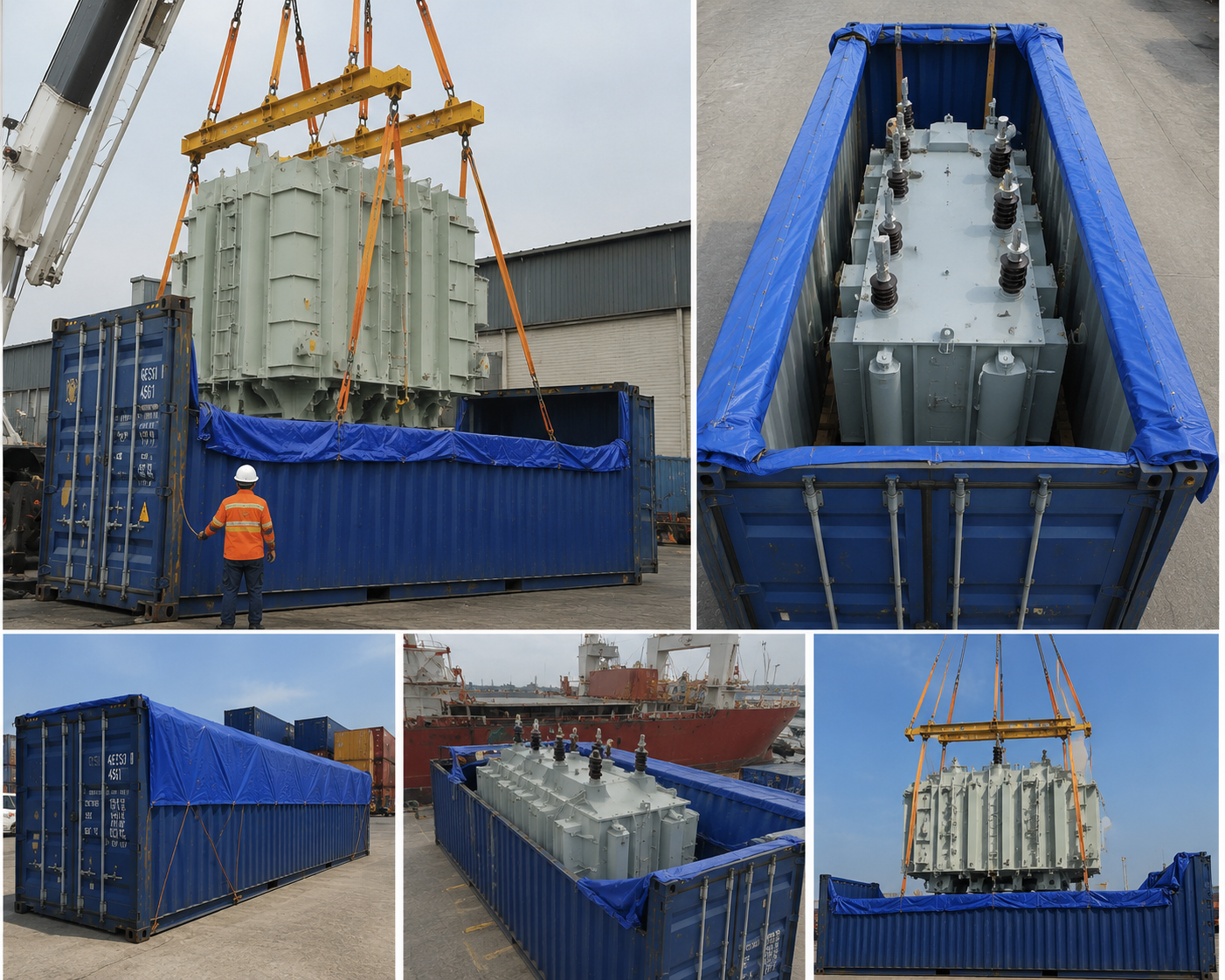
If the cargo width remains within standard container limits but the height exceeds the allowable dimension, Open Top is the optimal solution.
After loading the cargo using a crane, the carrier will cover the top with tarpaulin to protect the goods from weather conditions.
Cargo That Must Be Loaded from Above
Some types of cargo cannot pass through standard container doors and must be loaded directly from the top.
Typical examples include:
- One-piece machinery
- Steel coils
- Granite blocks
- Precast components
Advantages of Open Top Containers
- Usually lower cost than Flat Rack containers
- Side walls help secure cargo more effectively
- Reduced cargo shifting during sea transportation
- Tarpaulin cover offers better protection from external conditions
3. When Should You Choose a Flat Rack Container (FR)?
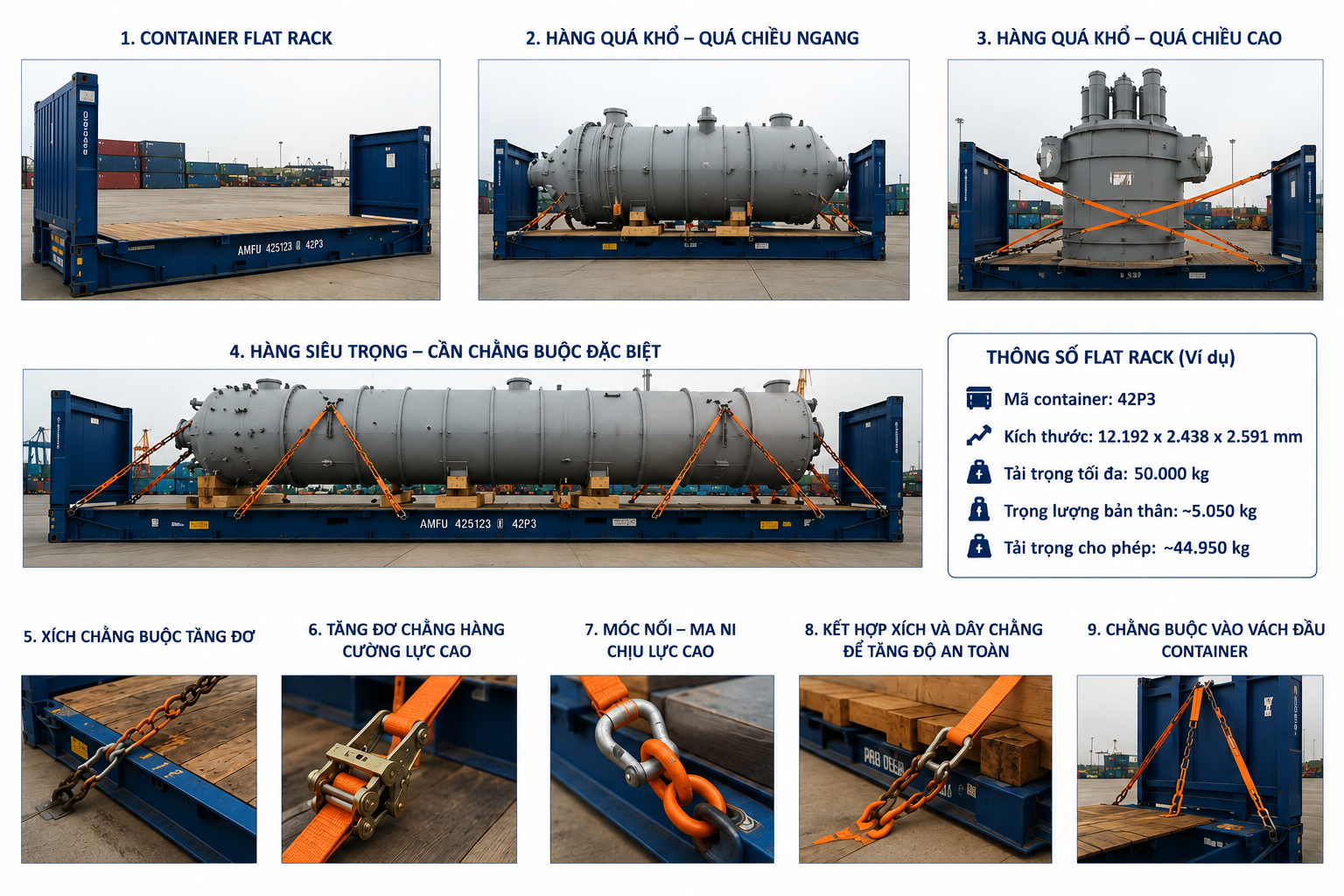
Cargo Exceeding Both Width and Height
Flat Rack containers are almost mandatory when cargo exceeds dimensions in both width and height.
Since there are no side walls, cargo can extend beyond the container body while still remaining transportable.
Common cargo types include:
- Wheel loaders
- Excavators
- Construction equipment
- Industrial boilers
- Production line equipment
- Wind turbine blades
Heavy Cargo Requiring Special Lashing
Flat Rack containers feature:
- Extremely strong steel flooring
- Robust lashing rings
- High-capacity securing systems for cargo weighing dozens of tons
These features are critically important for OOG sea freight transportation.
Advantages of Flat Rack Containers
- Suitable for extremely oversized and overweight cargo
- Flexible loading and unloading methods
- Side loading by crane is possible
- Suitable for self-propelled vehicles driving on/off the container
4. Quick Comparison: Flat Rack vs Open Top
| Criteria | Open Top Container (OT) | Flat Rack Container (FR) |
|---|---|---|
| Size limitation | Oversized in height | Oversized in both height and width |
| Loading method | Top loading by crane | Top loading, side loading, or self-driven |
| Cargo protection | Better with tarpaulin cover | Lower protection, exposed to environment |
| Lashing capability | Good | Excellent |
| Load-bearing capacity | Medium | Very high |
| Transportation cost | Lower | Higher |
| Suitable cargo | Machinery, steel coils | Extremely oversized heavy equipment |
5. Important Notes for OOG Cargo Transportation
Accurate Dimension Measurement
Even a few centimeters of error can cause shipping lines to:
- Reject the cargo
- Apply additional surcharges
- Fail to load/unload according to schedule
Therefore, on-site surveys and precise measurements are extremely important.
Lashing Is a Critical Factor
OOG cargo often has:
- A high center of gravity
- Uneven weight distribution
- Large dimensions
Improper lashing may cause cargo shifting, creating serious risks during ocean transportation.
Be Aware of Additional Charges
Businesses should pay attention to the following costs:
- Over-Gauge Surcharge
- Specialized lifting charges
- CY storage charges
- Domestic transport permits for oversized and overweight cargo
Songwin – Safe and Optimized OOG Transportation Solutions
Transporting oversized and overweight cargo always requires hands-on experience, on-site handling capability, and advanced technical planning. At Songwin, every OOG shipment is carefully consulted and executed with the most optimized solution.
Why Customers Choose Songwin
- Experienced experts in OOG transportation
- Accurate container recommendations to optimize costs
- International-standard lashing solutions
- Strong connections with major shipping lines
- Guaranteed FR/OT container availability even during peak seasons
Contact Songwin Today
Are you looking to transport:
- Oversized machinery
- Construction equipment
- Heavy lift and oversized cargo
- Production line systems
Songwin is ready to accompany your business with safe, cost-effective, and efficient transportation solutions.
SONGWIN INTERNATIONAL LOGISTICS VIETNAM CO., LTD
📍 Address: 344 Nguyen Trong Tuyen Street, Tan Son Hoa Ward, Ho Chi Minh City, Vietnam
📞 24/7 Hotline: 083.681.3969 - 0373.262.105
📧 Email: Sales2@songwinlog.com
Songwin Logistics – Reputation Builds the Brand, Professionalism Creates Success.
![[Detailed Guide] Procedure for Obtaining a Certificate of Eligibility for Conditional Chemical Trading](https://songwinlog.net/thumbs/355x266x1/upload/news/bai-dang-instagram-thong-bao-lich-nghi-tet-2026-cao-cap-toi-gian-do-vang-1-3608.png)